Superior Roof Cleaning · London and the South East
Roof cleaning methods: hand, soft wash, steam and pressure
An honest comparison of the four ways we clean roofs, which one suits each kind of tile, and why we use the gentlest method that does the job.
- The gentlest method that works
- No pressure washing on clay, slate, old or fragile tiles
- Biocides used as the law and the label require
Roof cleaning methods: hand, soft wash, steam and pressure: call for a fixed quote
Our rule: the gentlest method that works
Every roof is different. The tiles, their age and condition, the pitch, how much moss there is and how the roof drains all change how it should be cleaned. So we don’t arrive with one method and use it on everything. We look at the roof first, then choose the gentlest method that will do the job properly.
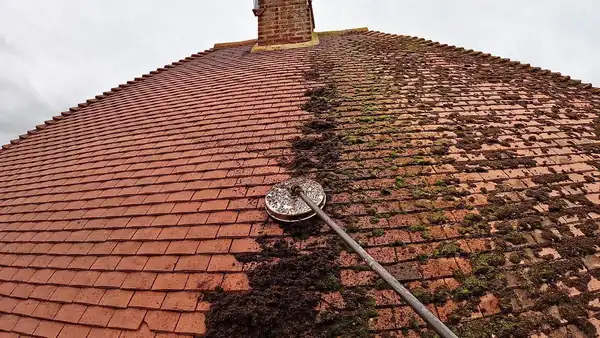
On most roofs that means removing the moss by hand, then treating what’s left with a biocide applied by soft wash. Steam at low pressure helps on some roofs. Controlled pressure is the last option, used only on robust tiles, typically modern concrete, after we’ve checked their condition. We never pressure wash clay tiles, natural slate, or old or fragile tiles.
The four methods we use
1. Hand moss removal
Moss is scraped and brushed off by hand with scrapers and stiff brushes, working with the tiles rather than against them. The moss is bagged and taken away, and we clear the gutters of the moss that falls. This is the backbone of almost every job we do, and it’s the method that puts the least stress on the roof. Read more on our roof moss removal page.
2. Soft wash with biocide
A biocide is applied at low pressure to kill the moss, algae and lichen left behind after hand removal, including spores you can’t see. It slows regrowth, but it isn’t permanent: it typically lasts around one to a few years, depending on shade and aspect. Lichen in particular clings hard, and scraping it can damage the tile surface, so it’s usually treated and left to weather off. See soft wash roof cleaning and biocide roof treatment.
3. Low-pressure steam
Hot water and steam at low pressure lift dirt, algae and stubborn growth that brushing leaves behind, without the force of a jet wash. It suits many roofs, but not every one, and we decide tile by tile. More on roof steam cleaning.
4. Controlled pressure, only where suitable
On robust tiles in good condition, usually modern concrete interlocking tiles, a controlled, low-pressure wash working from the top of the roof down can be the right finish. We only use it after checking the tiles, and never as a default. It is never used on clay, slate, old or fragile tiles.
Which method suits which roof
| Roof covering | Hand removal | Soft wash biocide | Low-pressure steam | Controlled pressure |
|---|---|---|---|---|
| Clay tiles | Yes, the main method | Yes | Yes, with care, where the tiles are sound | No, never |
| Concrete tiles | Yes, the main method | Yes | Yes | Only on robust tiles, after a condition check, and never as a default |
| Natural slate | Yes, worked from proper access, not by walking on the slates | Yes | Yes, with care, where suitable | No, never |
| Fibre cement and artificial slate | Gentle, low-impact brushing only, no aggressive scraping | Yes, at low pressure | Only after we have looked at the roof and agreed it is suitable | No, never |
| Historic and listed roofs | Yes, gentle hand brushing | Where suitable, after talking it through with you | Low pressure, where suitable | No, never |
The table is a starting point, not a promise. A concrete tile roof that’s old, crazed or soft won’t get pressure at all, and a clay roof with loose tiles may need repairs before anything else. Our roof types pages explain each covering in more detail.
Why we don’t jet wash most roofs
Roof tile manufacturer Wienerberger advises against high-pressure jet washers on roofs. Its guidance on how to clean roof tiles explains that they can damage tile finishes, strip colour from concrete tiles and force water into the interlocks and headlaps, where it shouldn’t be. If a pressure washer is used, Wienerberger says it should be on low pressure, working from the apex down.
The same guidance explains why moss matters in the first place. Moss holds moisture, so tiles stay damp; it can block the water channels in interlocking tiles; it can crack ridge mortar; and damp makes clay tiles in particular more prone to delamination, where the surface separates from the body of the tile. It also advises removing moss with a trowel or stiff brush, ideally on a dry day, and not walking on tiles, because hairline cracks can grow in freeze-thaw. That is very close to how we work.
Biocides and the law
Products used to control moss, algae and lichen are biocides, and they are regulated. HSE explains that many biocidal products, including those for controlling algae, usually require approval from HSE before they can be advertised, sold, supplied, stored or used in Great Britain, and that products need authorisation under the GB Biocidal Products Regulation once their active substance is approved (HSE: UK biocides law). HSE keeps a register of authorised products.
We only use biocides approved or authorised for this use in Great Britain, as the law requires, and apply them as the label says, including the weather conditions the label asks for. A biocide needs a dry spell to work, so we plan around the forecast.
Controlling the run-off
Washing a roof produces water mixed with moss, dirt and, where used, biocide. GOV.UK’s pollution prevention guidance for businesses is clear that surface water drains discharge directly to the environment, and that only clean water should go into them or into soakaways.
So we control run-off. We protect gullies and drains, keep the gutters running to the right drains, collect moss and debris rather than washing it away, and don’t let moss sludge or biocide wash into surface water drains. If you’re not sure where your downpipes go, tell us and we’ll look at it with you.
Working safely at height
HSE notes that almost one in five deaths in construction work involve roof work, and that all roofs should be treated as fragile until a competent person has confirmed they are not (HSE: roof work). The Work at Height Regulations 2005 apply to every roof we clean.
We plan access to suit the roof in front of us. That might be ladders and roof ladders, a tower or scaffold, or powered access where it’s needed. We don’t walk on fragile roofs, and we set up so that we spread our weight and avoid treading on tiles and slates wherever we can.
Historic roofs
Older and listed roofs get the gentlest treatment of all. The Society for the Protection of Ancient Buildings (SPAB) notes in its roof maintenance guidance that excessive moss is often undesirable because it holds moisture, that acidic rainwater running off moss can corrode some metals below, such as gutters, and that a seasonal brushing down helps control the build-up. On these roofs we brush by hand and use low-pressure steam only where it suits. See historic and listed roofs.
Roof cleaning near you
Related
Roof cleaning methods: hand, soft wash, steam and pressure: common questions
Do you pressure wash roofs?
Only rarely, and only on robust tiles, typically modern concrete, after we’ve checked their condition. We never pressure wash clay, slate, old or fragile tiles. Most roofs are cleaned by hand, then treated with a biocide by soft wash.
Which roof cleaning method is best?
The gentlest one that works on your roof. For most roofs that is hand moss removal followed by a soft wash biocide, with low-pressure steam where it helps. We’ll explain our choice before we start.
Will the moss come back after cleaning?
In time, yes. A biocide slows regrowth, typically for around one to a few years depending on shade and aspect, but it isn’t permanent. Shaded and north-facing roofs tend to regrow sooner.
Is the biocide you use legal?
Yes. We only use biocides approved or authorised for this use in Great Britain, as the law requires, and apply them as the label says.
Where does the dirty water go?
We control run-off, protect gullies and drains, and don’t let moss sludge or biocide wash into surface water drains. Moss and debris are collected and taken away.
Page updated 30 October 2026