Superior Roof Cleaning · London and the South East
Roof moss removal
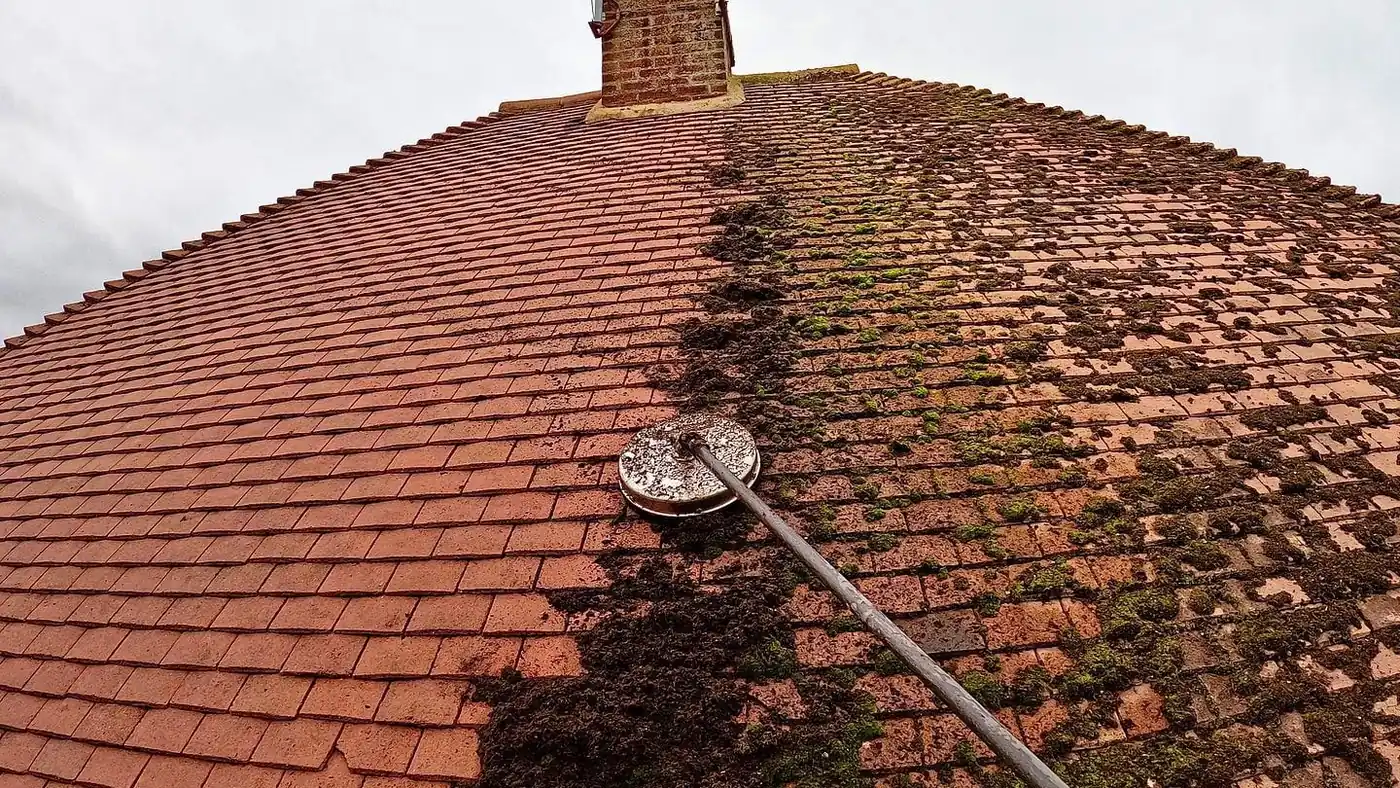
Moss scraped and brushed off your roof by hand, bagged and taken away, with the gutters cleared of the moss we remove and an optional biocide treatment to slow regrowth.
- Moss cushions building up across the tiles
- Clumps of moss dropping onto paths and drives
- Gutters and downpipes blocked with moss
What roof moss removal involves
Most roof moss forms cushions that sit on the tiles and soak up rain like a sponge. That keeps the roof damp long after the weather has cleared, and as the cushions grow they lift, roll down the slope and end up in the gutters and downpipes. The SPAB notes that excessive moss is often undesirable on roofs, and that acidic water running off moss can corrode some metals below, such as gutters. We remove moss by hand, using scrapers and stiff brushes, which is how Wienerberger recommends it is done. We work with the tiles, take care around the ridge and the laps, and bag the moss as we go so it’s taken away rather than left in your garden. Once the bulk is off, a soft wash with biocide can treat the spores that are left. Our guide to whether moss damages roof tiles explains what it really does, and removing roof moss yourself covers the risks of a DIY job.
We cover London and the South East, with 20 years’ experience behind us. We’re fully insured, we’re a Checkatrade member, and every job comes with a written 12-month workmanship guarantee (what it covers).
Problems we put right
- Moss cushions building up across the tiles
- Clumps of moss dropping onto paths and drives
- Gutters and downpipes blocked with moss
- Moss growing over the ridge mortar
- Moss creeping into the interlocks and laps
What we work on
- Moss on the tile courses
- Ridge and hip tiles
- Tile interlocks and laps
- Valleys
- Verges and eaves
- Gutters below the roof

How it works
- We look at the roof and the moss first, then agree the method and a fixed quote with you.
- Safe access is set up to suit the roof, and the area below is protected.
- Moss is scraped and brushed off by hand, working down the roof with the tiles, and bagged as we go.
- We clear the gutters of the moss we remove and, where agreed, apply a biocide by soft wash to slow regrowth.
- The area is cleared up, the moss is taken away and we show you the finished roof.
Why we remove moss by hand
Hand removal lets us feel how each tile is fixed and how sound it is, and it puts no water under pressure into the laps and interlocks. Wienerberger recommends removing moss with a trowel or stiff brush, ideally on a dry day, and warns that walking on tiles can cause hairline cracks that grow in freeze-thaw. So we plan access to keep foot traffic on the tiles to a minimum, and we take extra care on clay tiles, slate and older roofs.
Treating what’s left
Scraping takes off the moss you can see, but spores stay on the tiles. A biocide applied by soft wash kills remaining moss, algae and lichen spores and slows regrowth. It isn’t permanent: it typically lasts around one to a few years, depending on shade and aspect. We only use biocides approved or authorised for this use in Great Britain, as the law requires, and apply them as the label says, which includes waiting for a dry spell so it can work.
Is it a DIY job?
Moss removal means working at height on a surface that may not take your weight. The HSE advises that all roofs should be treated as fragile until a competent person has confirmed they are not. A ladder against the gutter is not safe access to a roof slope, and standing on tiles can crack them. If you can reach moss safely from the ground, such as on a low porch or a shed, a stiff brush may be enough. For anything higher, it’s a job for people with the right access and insurance.
Why it’s worth doing now
Moss only gets thicker. Each season the cushions hold more water against the tiles, more clumps wash into the gutters, and more growth works its way into the interlocks and over the ridge mortar. Removing it while it’s light is a quicker, gentler job than removing it once it covers the roof. It also stops the steady drop of moss onto paths, drives and patios, and keeps the gutters and downpipes clear. A dry spell is the best time, so it’s worth booking before the weather turns.
What affects the quote
We don’t publish set prices, because no two roofs or properties are the same. Call 01342 344 936 or use the quote form with a few details and photos, or we’ll come and look, and you’ll have a fixed price before any work starts. The main things that change it are:
- The size and pitch of the roof, and any extensions or a conservatory below
- Height and access: ladders, a tower, scaffold or powered access if the roof needs it
- How much moss, algae and lichen there is
- The tile type and its condition, which decides the method
- Which method suits the roof: hand removal, soft washing, steam or controlled pressure
- Whether biocide and gutter clearing are included
- Parking and where we can set up safely
What a good quote includes
- A look at the roof, from the ground, your photos or a visit, before the price is given
- The method for your tile type, in writing
- How run-off will be controlled and kept out of surface water drains
- Which biocide is planned, approved or authorised for use in Great Britain
- How access will be set up safely
- Proof of insurance and the written guarantee terms
Afterwards
The roof is left clear of moss, the gutters cleared of what we removed, and the moss taken away. If you chose a biocide treatment, it slows regrowth for typically around one to a few years, depending on shade and aspect, and any lichen it treats fades as it weathers off. Keep trees cut back where you can and look at the roof once a year. The job is covered by a written 12-month workmanship guarantee, and you’re welcome to call us when you’d like it looked at again.
The right method for the surface
We use the gentlest method that works. Moss comes off by hand first; soft washing with biocide and low-pressure steam deal with what’s left. Controlled pressure is used only on robust surfaces after a check, and never on clay, slate, old or fragile tiles. Our methods compares each approach by tile type, and roof types explains how we treat each roof covering.
Run-off and biocides
Surface water drains discharge directly to the environment, so we protect gullies and drains and don’t let moss sludge or biocide wash into them. We only use biocides approved or authorised for this use in Great Britain, as the law requires, and apply them as the label says.
Roof moss removal: common questions
Does moss damage roof tiles?
Moss holds moisture, so the tiles stay damp. Wienerberger notes that moss in interlocks can block water channels, moss on ridge mortar can crack it, and damp makes clay tiles in particular more prone to delamination. It also blocks gutters when it washes off. Removing it keeps the roof drier and the gutters running.
Will the moss grow back?
In time, yes. Moss grows wherever a roof stays damp and shaded. A biocide treatment after removal slows regrowth, typically for around one to a few years, depending on shade and aspect, but it isn’t permanent. A yearly look from the ground tells you when it’s building up again.
What happens to the moss you remove?
We bag it as we go and take it away, and we clear the gutters of the moss we remove from the roof.
Can you remove moss from a clay tile roof?
Yes, by hand. Clay tiles can delaminate when they stay damp, so we never pressure wash them. We scrape and brush gently, working with the tiles, and can follow with a soft wash biocide where it suits the roof.
Can I remove roof moss myself?
From the ground, on a low roof, possibly. Anything that means climbing onto a roof is risky: tiles crack under foot and the roof may be fragile. Our guide to DIY moss removal covers what to think about first.
How much does roof moss removal cost?
We don’t publish prices, because it depends on the roof. The size and pitch, height and access, whether a tower, scaffold or powered access is needed, how much moss there is, the tile type and condition, and whether you want biocide and full gutter clearing all affect it. Call for a fixed quote and you’ll know the price before we start.
Do you give a fixed price before you start?
Yes. Call us or use the quote form with a few details and photos, or we’ll come and look, and you’ll have a fixed price before any work starts.
Are you insured, and is the work guaranteed?
Yes. We’re fully insured, we’re a Checkatrade member, and every job comes with a written 12-month workmanship guarantee. It covers the work we did; it isn’t a promise that moss won’t grow back.
Page updated 30 October 2026
Near you
We cover London and the South East. Find roof moss removal in your town:
Related services
- Roof cleaning
- Soft wash roof cleaning
- Roof steam cleaning
- Biocide roof treatment
- Roof coating and sealing