Oxfordshire · Biocide roof treatment
Roof Biocide Treatment in Swalcliffe
Looking for roof biocide treatment in Swalcliffe? We see the job first, fix the price and choose the gentlest method that does the job, finishing with a full clear-up.
- A shaded slope that turns green quickly
- Lichen best left to a treatment rather than a scraper
- The first patches of moss
Roof biocide treatment in Swalcliffe
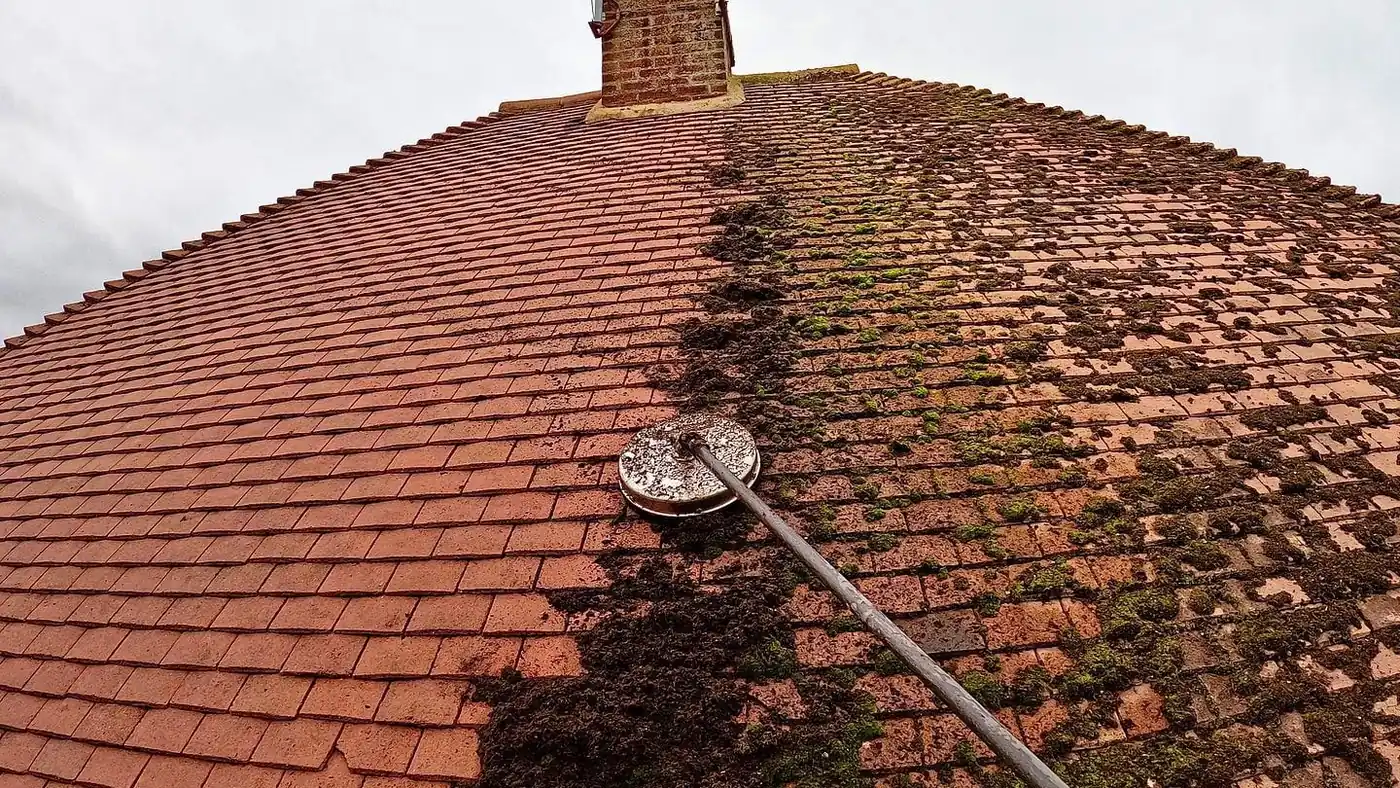
The treatment goes on at low pressure, evenly across the roof. That suits every kind of roof, from clay and slate to concrete since no water is driven into the laps. Thick moss is removed by hand first, so the biocide reaches the tile. If you are dealing with a north-facing slope that greens up fast and black streaks down the slopes, we can help.
In a rural spot like Swalcliffe, access may mean a long drive, a narrow lane or a gate to get through, and it helps to know about turning space and parking. Trees around rural homes often mean more shade, more moss and more leaves in the gutters.
Nothing about the guarantee is left to memory. Every job comes with a written 12-month workmanship guarantee, which covers our workmanship. Keep it somewhere safe in case you need it.
- Location
- Swalcliffe (OX15)
- Region
- Oxfordshire
- Guarantee
- Workmanship guaranteed in writing for 12 months
- Quote
- Fixed price, set before we begin
- Track record
- Checkatrade member, fully insured
- Call
- 01342 344 936
- Page updated
- 30 October 2026
What happens if it’s left?
An early treatment saves bigger work later. Thin growth responds well, while years of build-up need removing first. It takes part of a day for many homes, depending on the size of the roof and the access. Looking after the outside of a home in Swalcliffe now saves bigger work later.
One house or several rental properties, we price it on the same basis: what needs doing, how we reach it and how long it takes. The price is fixed before any work starts.
Why choose Superior Roof Cleaning in Swalcliffe
- Members of Checkatrade
- A written 12-month workmanship guarantee
- Sludge and dirty water kept out of surface water drains
- One phone number across our whole area
Take a look at how roof cleaning is priced and which method suits your roof.
Places near Swalcliffe
Also in Swalcliffe
What we are called out for in Swalcliffe
Regrowth is quickest where the roof stays damp. North-facing slopes and areas under trees stay wet after rain, so they are where a treatment wears off first.
Look out for these signs:
- Keeping a freshly cleaned roof clearer for longer
- Moss returning after a clean
- Lichen crusts along the ridge
- Growth coming back on a treated roof
Live on one of the older roads by Church of St Peter and St Paul? Clay tiles and slate are common on homes like yours, and both are treated gently.
Comparing quotes
- Whether the workmanship is guaranteed in writing
- Whether a biocide is included, and that it’s authorised for this use
- Whether the price is fixed
- Whether ladders, a tower or scaffold are allowed for in the price
Roof biocide treatment around Swalcliffe: what to know
Count the conservation areas within two miles of Swalcliffe and you get about 4; the nearest is the Swalcliffe conservation area, roughly 0.1 miles north-west of central Swalcliffe. For homes in a conservation area, we keep to gentle cleaning, and anything that alters the roof’s appearance, such as a coating, is one to check with Cherwell council first. Historic buildings nearby include Broughton Castle, some 2.5 miles east of Swalcliffe. Buildings like that show how long clay and slate roofs can last when they’re looked after.
Living near Woodford Bottom and Lamb's Pool, about 1.8 miles south-west of Swalcliffe, can mean more trees, shade and leaf fall. Leaves on the tiles and in the gutters hold damp, and moss thrives on damp. Traffic for Sibford School can make the road outside hard to use at certain times of day. It’s worth a mention when you book, as the van and ladders need space outside.
Swalcliffe is about 5 miles west of Banbury, in Oxfordshire. Whether you’re in the middle of Swalcliffe or further out, roof biocide treatment is available for all kinds of property, from a terrace to a large detached house. Swalcliffe is one of 443 towns, villages and districts in Oxfordshire where we work for homeowners and landlords. We also work in Reading, around 45 miles away.
Work in OX15 is quoted and carried out the same way as anywhere else. If you need roof biocide treatment at a property on The Green, Bakers Lane and Brick Row or anywhere close by, we can take on the work. We also cover Tadmarton (1 mile east), Burdrop (1 mile west), Sibford Ferris (1 mile west), Sibford Gower (2 miles west) and Shutford (2 miles north). Larger places within reach include Banbury (5 miles east), Bure Park (15 miles south-east), Chipping Norton (8 miles south-west), Neithrop (4 miles north-east), Grimsbury (6 miles east) and Ruscote (4 miles north-east).
What’s near Swalcliffe
Around Swalcliffe, homes near The Lampet Arms fall within our area as well. Nearby you’ll also find Broughton Castle (2.5 miles east) and Bloxham Village Museum (3.5 miles south-east). Open spaces near Swalcliffe include Crouch Hill and Woodford Bottom and Lamb's Pool.
Let and managed properties
For blocks of flats and other shared buildings, the freeholder or management company often arranges the outside work. We can quote for the whole building and work with whoever is responsible.
The tenancy agreement or lease normally says who is responsible for the outside. We’re happy to deal with either side, and we’ll tell whoever books us what we found.
Doing it yourself: an honest view
Roof work is dangerous, even for people who do it every day. According to HSE, almost one in five deaths in construction work involve roof work, and its advice is to treat every roof as fragile until a competent person says otherwise. Anything that means going up onto a roof is best left to us.
Hard paving at ground level is a reasonable DIY job, and that’s fine. Just watch where the water goes: surface water drains run straight to the environment, so dirty water and cleaning products shouldn’t go down them.
How it works
The first job is protection: gullies and drain covers are protected, and anything nearby is covered or moved out of the way. After that, we get on with the roof biocide treatment. The job takes an hour or two for a small roof and longer for a large one, with a full clear-up at the end. Mention ponds, greenhouses or anything fragile near the work.
- We check whether a treatment alone will do, or the roof needs a clean first.
- You get a fixed quote and a date planned around the weather.
- We protect drains and gullies first.
- Heavy growth comes off by hand, then the biocide is applied by soft wash.
- The area is cleaned down and precautions explained.
Preparing for the work
- Let us know about anything fragile below, like a glass roof
- Take in any washing and move pots out of the way
- Mention any problems you’ve noticed
Pricing your job
To help us price the job: where the property is and what you’d like done, a few photos from the ground and anything you know about the history, such as earlier cleaning or repairs. Then talk to us on 01342 344 936 or fill in the quote form.
Advice
Common questions in Swalcliffe
My house in Swalcliffe is in a conservation area. What should I know?
It mainly matters for changes, not cleaning: a coating or new tiles alter how the roof looks, so check those with Cherwell council. The Swalcliffe conservation area, roughly 0.1 miles north-west of central Swalcliffe, is the closest to Swalcliffe.
Who do I check with about listed building consent in Swalcliffe?
It’s Cherwell council, the local council for Swalcliffe. Its planning or conservation team can tell you whether your home is listed or in a conservation area. If your home is listed, listed building consent is needed for works that affect its special character, so check with the council before a coating or any change to how the roof looks.
Are the products you use a risk to pets and plants?
Plants, ponds and borders below the work are protected and keep run-off under control. Biocides are applied at low pressure and as the label directs, using products approved or authorised for this use in Great Britain. Pets are best kept inside until we are done.
Do you work on listed or historic buildings?
Yes, carefully. Historic surfaces get hand methods or low-pressure steam, never a pressure washer, and we will suggest the gentlest effective method. If you are unsure about consent, the council’s conservation officer can advise.
Does maintenance matter for my home insurance?
Many policies exclude gradual damage and wear and tear, so maintenance matters. We cannot tell you what your policy covers, but well-kept roofs and gutters are part of good upkeep.
How long will the treatment take to apply?
That depends on the size of the roof and the access. As a guide, it takes a few hours on the day, while the treated growth weathers away over the following months and the results build for months.
Do you work in Swalcliffe?
Yes. We work across Greater London, Surrey, Kent, East and West Sussex, Hampshire, the Isle of Wight, Berkshire, Buckinghamshire, Oxfordshire, Hertfordshire and Essex, and that includes Swalcliffe.
Can letting agents book you?
Yes. Let us know who to contact and how to reach the tenant, and we will arrange the visit. Anything we notice is passed on to whoever booked the work.
Aftercare tips
Growth and dirt come back in time, but good habits slow them down. A few tips:
- Never scrape lichen yourself
- Watch for new green patches
- Book a repeat treatment early
- Leave the treated roof alone
We give a written 12-month guarantee on our workmanship. It’s about our workmanship rather than a regrowth guarantee, because spores keep landing.
Clear drainage helps the treated roof. Blocked gutters keep the lowest tiles wet, which is where regrowth often starts.
How the job changes from site to site
Natural slate
Slate is brittle and can be lifted by pressure. The treatment goes on at low pressure and plan access to avoid walking on them.
Clay tiles
Mature clay tiles often carry lichen. Treating it avoids scraping the tile face and the weather does the rest.