Kent · Biocide roof treatment
Henley Street roof biocide treatment
Roof biocide treatment in Henley Street, done the careful way. We plan the access, protect the area and take the waste with us.
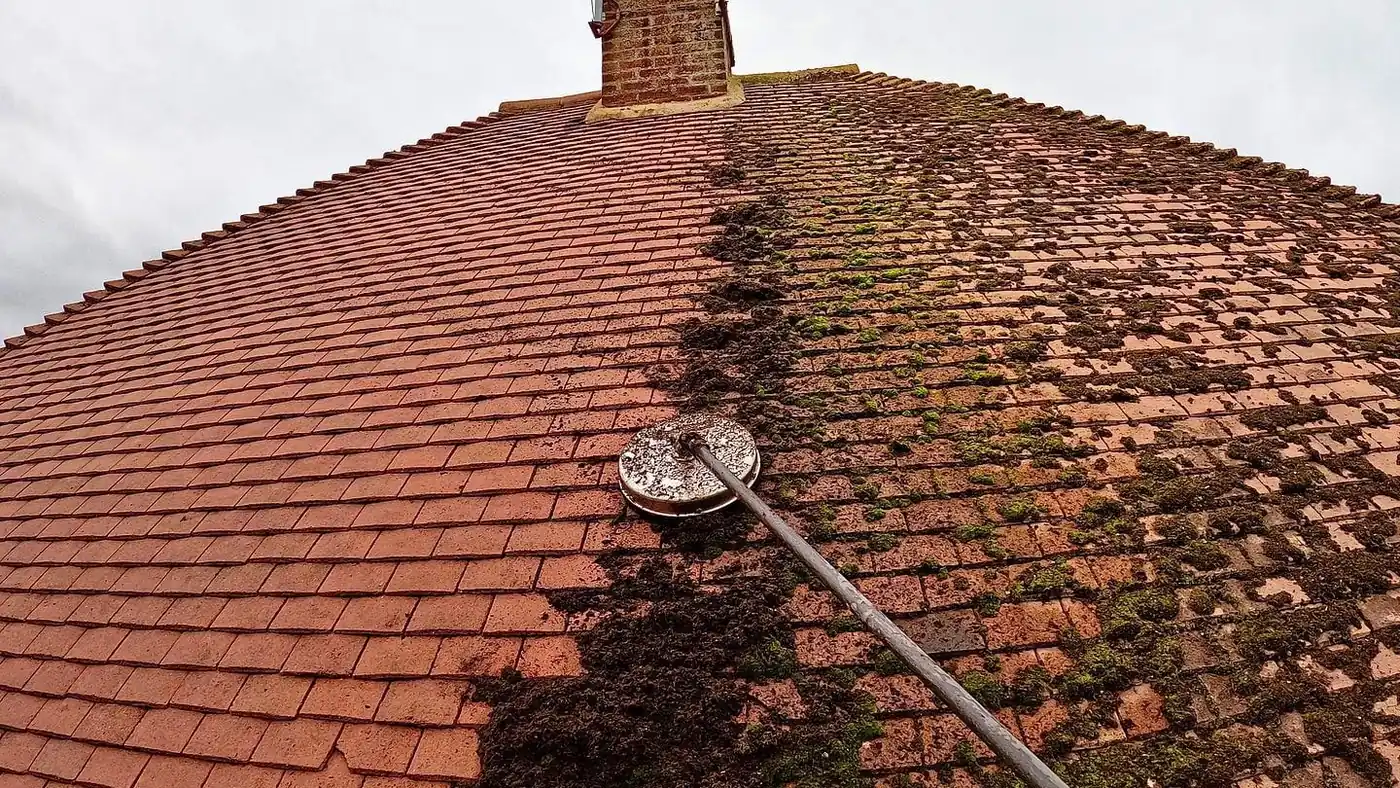
- New moss on a cleaned roof
- A shaded slope that turns green quickly
- The first patches of moss
What happens if it’s left?
An early treatment saves bigger work later. Light growth is quick to deal with, while years of build-up need removing first. The treatment takes a few hours on the day, while the treated growth weathers away over the following months. Looking after the outside of a home in Henley Street now saves bigger work later.
The cost depends on how big the job is, the height and access and how much build-up there is. You get a fixed price before any work starts, so you know where you stand.
Why choose Superior Roof Cleaning in Henley Street
- Access planned to suit the property
- A written guarantee on our workmanship for 12 months
- Only biocides authorised for the job in Great Britain, applied as the label says
- 20 years’ experience in roof and exterior cleaning
See how roof cleaning is priced or our methods by tile type.
Roof biocide treatment for homes in Henley Street
Protecting what’s below the roof is part of every treatment. Gullies and drain outlets are protected and we make sure no biocide runs into surface water drains. Plants and paths are protected as well. The work covers lichen patches, tile and slate surfaces and algae and black streaks, and common reasons people get in touch are small tufts of moss on the tiles and lichen spots across the tiles.
Older villages often have listed buildings and conservation areas, which makes gentle cleaning even more important. For anything beyond cleaning, such as a coating, the council’s conservation officer is the person to ask first.
Some firms suggest their work will keep things looking new for years. We’d rather be straight with you: in damp, shady spots, growth returns sooner. What you do get from us is a written 12-month workmanship guarantee on the work we carry out.
- Location
- Henley Street (DA13)
- Region
- Kent
- Cover
- 12 months on workmanship, in writing
- Quotes
- Fixed quote, agreed before any work
- Track record
- 20 years’ experience, fully insured
- Call
- 01342 344 936
- Reviewed
- 30 October 2026
Step by step
Any cleaning is done with the gentlest method that does the job, matched to the surface in front of us. Speed never comes before the condition of your property. All told, it takes part of a day for many homes, depending on the size of the roof and the access, and we clear up at the end. Tell us about the route to your home in Henley Street, especially narrow lanes or gates.
- First we decide whether to treat or clean and treat.
- The price is fixed and the date chosen for dry weather.
- Gullies and drain outlets are protected so nothing reaches surface water drains.
- We hand-clear thick moss before treating at low pressure.
- We clear up and go through anything you need to know.
Getting ready for the day
- Mention any permits or parking limits
- Let us know about earlier repairs or treatments
- Keep pets indoors while we work
Get a fixed quote
Quoting starts with seeing what’s involved, from your photos or, where that is not enough, a visit. After that, you get a fixed price before any work is booked.
Advice
Common questions in Henley Street
Who can tell me if my home in Henley Street is listed?
Henley Street comes under Gravesham council. The council’s conservation officer can say whether your home is listed and what needs consent. For listed homes, the council’s conservation officer is the person to ask before anything beyond gentle cleaning.
Do you need parking for a job in Henley Street?
A space on the drive or close by makes the job easier. Roads around Sole Street station, about 0.8 miles north-west of Henley Street, can fill with commuters’ cars, so mention where we could park when you get in touch.
Will you jet wash it?
Where it’s right for the surface, yes. Robust modern concrete tiles and most paving can take controlled pressure; clay tiles, slate, older or fragile tiles and solar panels cannot. You’ll know the method before booking.
How do you decide on the method?
The gentlest method that does the job is always our starting point. That might be hand scraping and brushing, a low-pressure soft wash with biocide, steam, or controlled pressure on robust surfaces, chosen after we’ve looked at the surface.
Is there anything I need to do beforehand?
Move cars off the drive, unlock side gates and keep pets indoors, and tell us about a conservatory, glass roof or nesting birds.
What about my neighbours?
If we need access across a shared drive or from next door, they’ll need to agree, so it’s worth asking them early. Otherwise, we keep to your side and protect anything close by.
Should I do it myself?
For anything at height, we’d say no. Almost one in five deaths in construction work involve roof work, according to HSE, and HSE advises treating all roofs as fragile. Ground-level jobs, like a patio, are a different story.
Is the biocide you use approved?
We only use biocides approved or authorised for this use in Great Britain, as the law requires. It’s applied as the label says, including dose, weather and precautions.
Towns and villages near Henley Street
Other services in Henley Street
Different parts, different methods
Concrete tiles
Treating concrete tiles avoids stripping their colour. It goes on gently and works over the following weeks.
Historic and listed roofs
A biocide treatment does not coat the roof or change its finish. Anything that alters a historic roof’s appearance should be discussed with the council first.
Keeping it in good shape
Simple habits between visits make a real difference. Our advice:
- Leave lichen to weather off after treatment
- Cut back overhanging trees
- Book a repeat treatment early
- Watch for new green patches
Your treatment comes with a written 12-month guarantee on our workmanship. It’s about our workmanship, not a promise that growth won’t return, since no biocide is permanent.
Copper strips or sacrificial lead at drip points can inhibit growth, the SPAB notes. Traces of metal wash down the slope with the rain and that can discourage moss and algae.
For landlords and letting agents
If you are an agent or property manager, you can deal with us directly. Send the address, what’s needed and how access works, and we’ll send you a fixed quote.
Between tenancies is often a good time for outside work because access is easy then. Let us know the window you are working to and we will try to fit around it.
Signs you need roof biocide treatment in Henley Street
Every roof is exposed to spores, all the time. They’re carried in the air and settle on the tiles and damp lets them take hold. Treating the roof interrupts it for a while.
Signs it’s time to call us include:
- A green film over the tiles
- Orange or yellow lichen on the ridge
- Clinging growth that would mark the tiles if scraped
- Lichen that won’t scrape off
Streets near a church such as Parish Church of St Peter and St Paul often include older homes, and older clay or slate roofs need hand cleaning rather than pressure.
What your quote should include
- Whether ladders, a tower or scaffold are allowed for in the price
- Which parts of the property the price covers
- Whether the waste is taken away
- How long their workmanship guarantee lasts
Henley Street roofs and what affects them
The Cobham conservation area, some 0.9 miles north of the middle of Henley Street, is the nearest of about 4 conservation areas within two miles of Henley Street. If your home is in a conservation area, cleaning is fine, but a coating or anything that changes the roof’s look should be checked with Gravesham council first. Henley Street is about 23 miles from central London, well inside the area where we carry out roof biocide treatment across London and the South East. Each job carries a 12-month written guarantee covering our workmanship. Older buildings in the area include Cobham College, about 0.8 miles north of Henley Street. Houses of that age are a reminder that clay and slate roofs can last a very long time with care.
Homes on school roads, near Cobham Primary School for example, can face busy mornings and afternoons. Tell us about it when you ask for a quote, and the start can be timed to suit. If you live near Sole Street station, roughly 0.8 miles north-west of Henley Street, on-street parking may be busy in the day, so mention it when you get in touch.
Henley Street is about 4 miles south of Gravesend, in Kent. If you need roof biocide treatment in Henley Street, please send a message through our quote form or call 01342 344 936 for a fixed quote. We work across London and the South East, Henley Street included. 922 places in Kent are on our list, from busy towns to small villages. Our Maidstone page covers homes nearby (10 miles or so).
Roof biocide treatment in DA13 follows the same fixed quote, careful work and written 12-month workmanship guarantee as everywhere else we cover. Close by, we work in Luddesdown (1 mile south), Gold Street (1 mile north-west), Sole Street (1 mile north-west), Round Street (1 mile north-west) and Foxendown (1 mile south-west). We also work in nearby towns such as Maidstone (10 miles south-east), Sittingbourne (15 miles east), Dartford (9 miles north-west), Sevenoaks (11 miles south-west), Gravesend (4 miles north) and Tonbridge (13 miles south).
Around Henley Street
Roofs on the roads around Camer Park Country Park, Meopham School and The Cock pub are on our patch, like the rest of Henley Street. Henley Street’s nearest station is Sole Street station, about 0.8 miles north-west. A little further out are Rochester Castle (4.6 miles east). Not far away are Ranscombe Farm and Gad's Hill.
Can I do it myself?
Solar panels need particular care. The manufacturer’s care guidance comes first, and don’t use a pressure washer or harsh chemicals. Since most panels are on a roof, the risk is the same as any roof work.
A pressure washer from a hire shop might look like a quick fix for the roof. Tile manufacturer guidance warns against high-pressure jet washers on roofs, because they can damage tile finishes, strip colour from concrete tiles and force water into the laps and interlocks.